
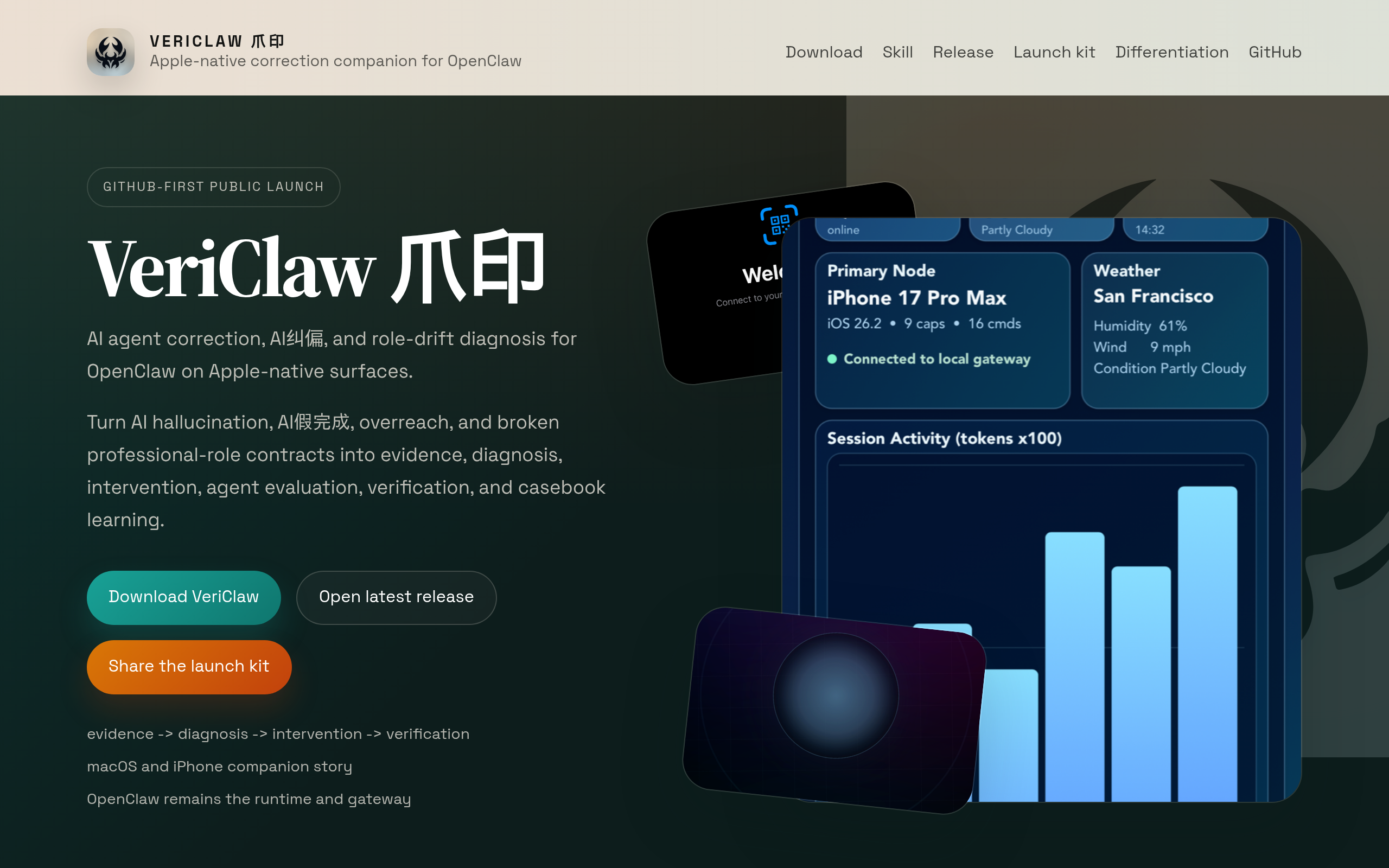
VeriClaw 爪印
Apple-native correction companion for OpenClaw.
About
VeriClaw 爪印 is the Apple-native correction companion for OpenClaw. It helps teams handle AI agent correction, hallucination remediation, fake completion diagnosis, and verification-first recovery when agents drift, hallucinate, or claim work is done without evidence.
Key Features
Evidence Capture
Automatically record and preserve the assistant's actual outputs, context, and interaction trace so teams have verifiable evidence before starting diagnosis or remediation.
Role-Drift & Hallucination Diagnosis
Structured diagnostics that classify failures as hallucination, overreach, fake completion, or role-contract breakage to guide the right intervention quickly.
Intervention & Recovery Workspace
A correction-first workspace where operators propose, apply, and test remediation steps against the captured evidence without relying on logs alone.
Verification & Casebook Learning
Verify that corrections hold, then record the tested fix and lesson into a team casebook for reuse and continuous improvement of agent supervision.
OpenClaw Native Integration
Installable as an OpenClaw skill/plugin or standalone macOS app; exposes a vericlaw discovery skill for canonical installs and product discovery within OpenClaw.
How to Use VeriClaw 爪印
Install VeriClaw, connect it to your OpenClaw workflow, and use it when an AI agent needs correction, diagnosis, or verification before closure.