
QR.
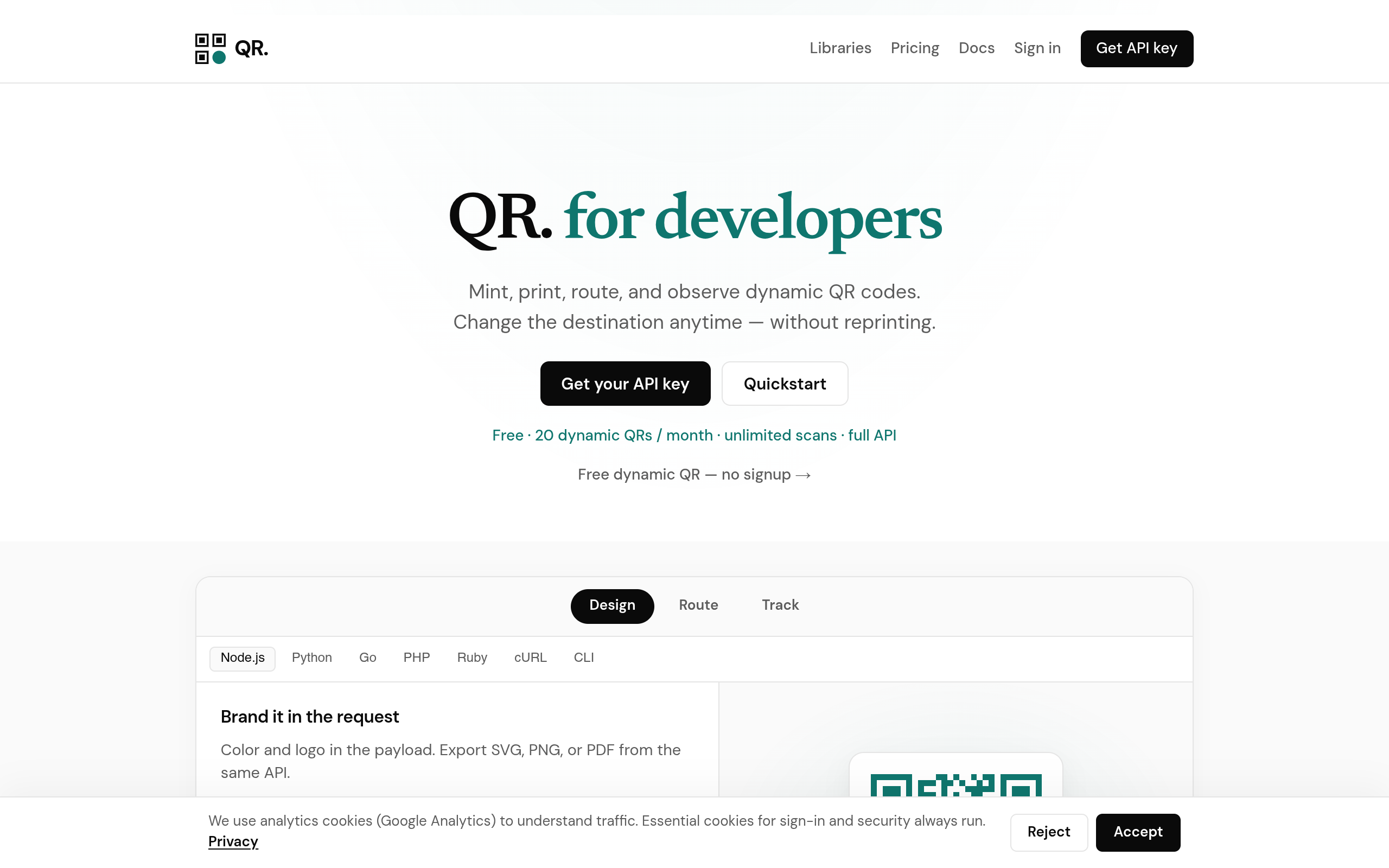
Dynamic QR code API for developers — mint, print, route, and observe. Change destinations without reprinting. Free tier + free no-signup generator.
About
QR. is the developer API for dynamic QR codes. Create codes over HTTP, export PNG/SVG/PDF, host edge short links on go.qrdot.dev, and change the destination anytime with a PATCH — no reprint. Compose one spine for most use cases: mint → print → live link → route → observe → brand. Edge rules cover device, country, time, password gates, and A/B. Scans fire signed webhooks without blocking the redirect. Official clients for Node, Python, Go, PHP, Ruby, plus a CLI. Free plan includes the full API (20 dynamic QRs/month, unlimited scans). There’s also a free no-signup generator at /create/ so anyone can try a living QR in seconds, then claim it into a dashboard and graduate to the API.
Key Features
Dynamic Edge Routing
Route scans at the edge by device, country, time, or weighted A/B rules so one printed code can resolve to different destinations without reprinting.
Mint & Manage via API
Create, update (PATCH), expire, and batch QR codes programmatically over HTTP with metadata, UTM tags, scan limits, and lifecycle controls.
Multiple Export Formats
Export codes as PNG, SVG, or print-ready PDF with styling and logo support for high-quality printing and packaging workflows.
Observability & Webhooks
Receive signed scan webhooks and REST analytics for every scan (non-blocking redirects) to integrate events into your analytics and backend systems.
Official SDKs & CLI
Official clients for Node, Python, Go, PHP, and Ruby plus a CLI and OpenAPI support to integrate QR. into existing developer stacks quickly.
How to Use QR.
1) Get an API key: Sign in to the dashboard and create an API key (free tier available). 2) Mint a QR: POST /v1/qr with targetUrl and optional rules/metadata to create a dynamic QR. 3) Export & print: Export the generated QR as PNG, SVG, or PDF (include logo/style if needed) and print once. 4) Route & observe: Update destinations anytime with PATCH, define edge rules (device/country/time/A-B/password), and subscribe to signed webhooks or use the analytics REST API to observe scans.