
pslify
Free PSL Calculator & Facial Attractiveness Rating
About
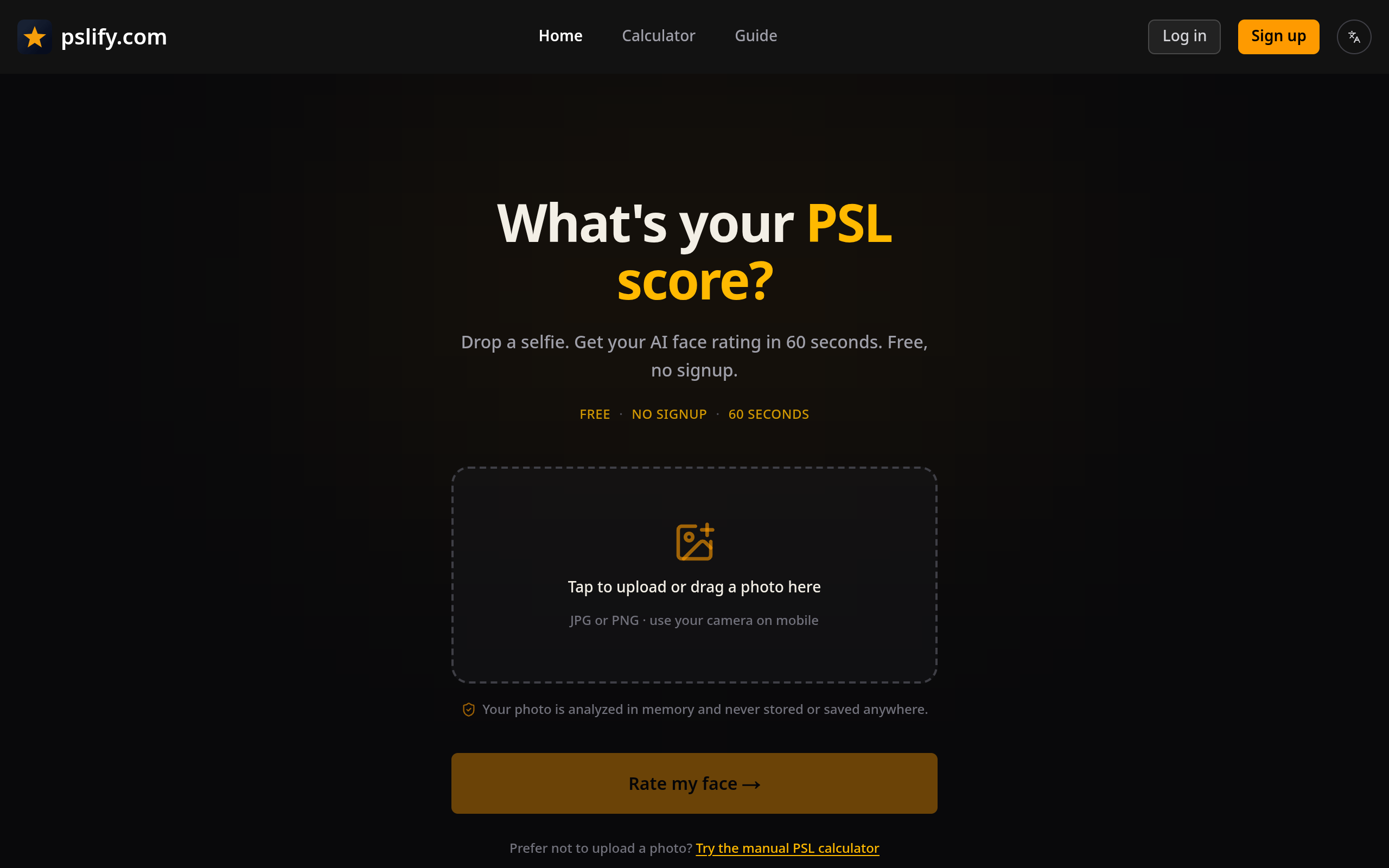
Get your free PSL (Potential Subjective Lookism) score instantly. Upload a photo for AI-powered facial attractiveness analysis covering symmetry, jawline, eye angle, and skin quality, plus a detailed PSL scale guide.
Key Features
Instant PSL Score
Upload a selfie (JPG/PNG) or use your phone camera and get an AI-generated PSL (1–10) score in about 60 seconds — free and no signup required.
Per‑feature Breakdown
Detailed sub-scores for Harmony, Dimorphism, Angularity and Skin/Grooming plus clear notes on what’s carrying or hurting the overall score.
PSL Scale Guide & Tier Mapping
Explains the bell-curve calibrated PSL scale and maps numeric scores to named tiers (e.g., MTN, HTN, Chadlite) so results are easy to interpret.
Privacy-first Processing
Photos are analyzed in memory and not stored, with an explicit note that one uploaded photo is for entertainment and not a definitive judgment.
Manual PSL Calculator
An on-site manual calculator lets users estimate their PSL without uploading an image, for users who prefer not to share a photo.
How to Use pslify
1) Open pslify.com and tap the upload area or use your mobile camera. 2) Choose a clear front-facing photo (JPG/PNG) — avoid extreme lighting or unusual angles. 3) Wait ~60 seconds for the AI to analyze and display your PSL score, tier, and per-feature breakdown with strengths/weaknesses. 4) Read the PSL guide for interpretation, try the manual calculator if you prefer not to upload, and use the insights to inform grooming or profile photo choices.