
Ottehr
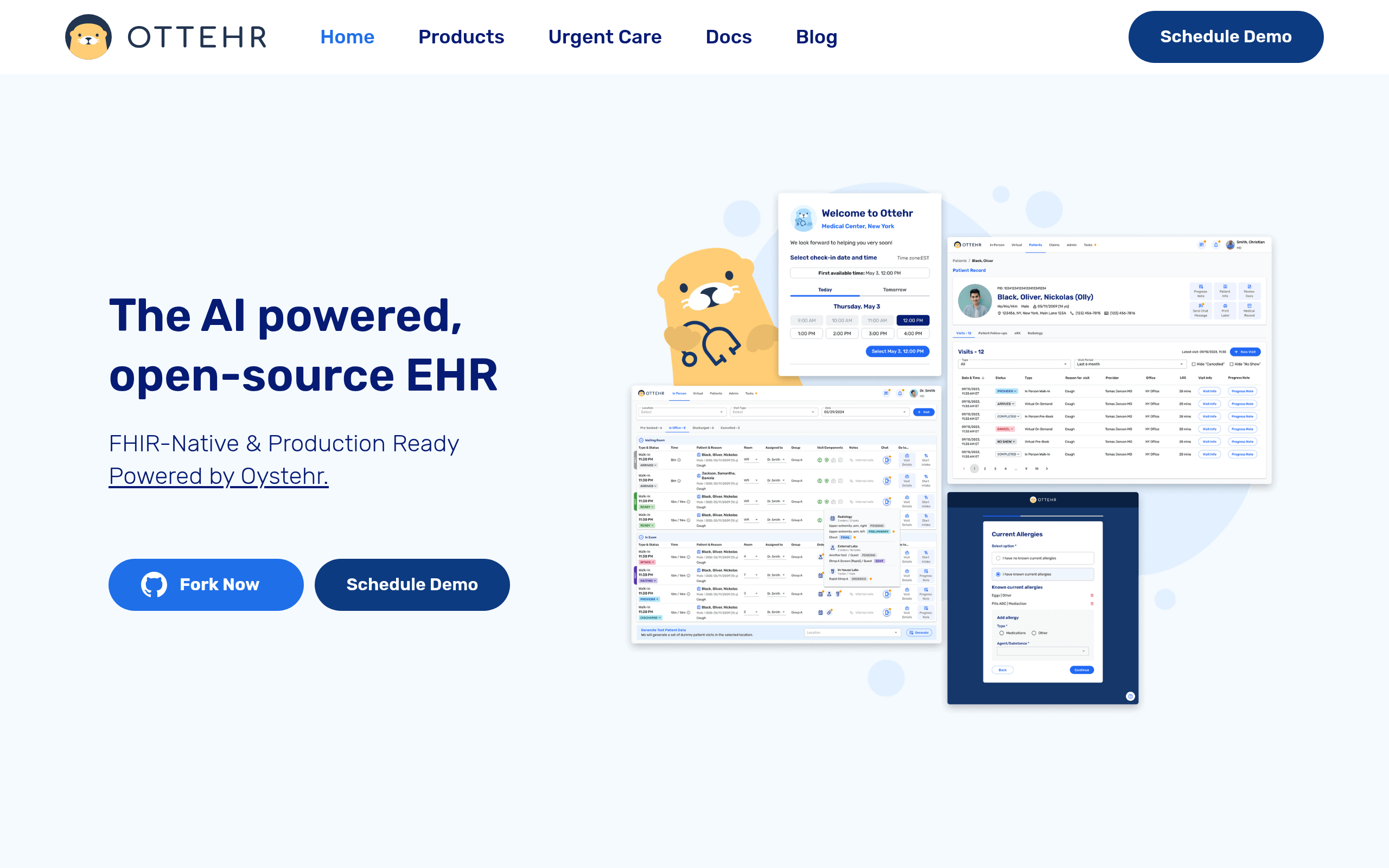
Ottehr is an AI-powered, open-source electronic health record (EHR) platform designed to modernize healthcare operations and improve patient care.
About
Ottehr is an AI-powered, open-source electronic health record (EHR) platform designed to modernize healthcare operations and improve patient care. Built with flexibility and scalability in mind, Ottehr helps clinics, hospitals, and healthcare providers manage patient records, appointments, documentation, and workflows from a single intelligent system. Its AI-driven capabilities automate repetitive administrative tasks, assist with clinical documentation, and help medical teams work more efficiently while reducing operational overhead.
Key Features
FHIR-native & Open Source
Built on FHIR standards and fully open-source so practices can fork, customize, and integrate the EHR to match exact clinical workflows and regulatory requirements.
AI Clinical Documentation
Ambient scribing, AI-guided HPI/medical history chatbot, and encounter summarization reduce documentation time and improve note accuracy.
Scheduling, Telehealth & Patient Engagement
Integrated appointment scheduling, patient portal, 1- and 2-way SMS, telemedicine video and messaging, and customizable paperwork to streamline patient interactions.
Revenue Cycle Management (RCM) & Billing
Real-time insurance validation, claims submission, denial management, charge master/ fee-schedule tools, patient statements, and payment processing to optimize revenue workflows.
Orders, eRx & Integrations
Support for e-prescriptions (eRx), diagnostic orders/results (labs/imaging), radiology integration, EPCS and connections to external systems for full clinical operations.
How to Use Ottehr
1) Request access or schedule a demo on the Ottehr website and choose hosted or self-host deployment. 2) Configure your instance: import or customize templates, paperwork, scheduling rules, and branding; enable FHIR integrations and payment/diagnostic connectors as needed. 3) Onboard staff and migrate records: set up user roles, train clinicians on the visits tracking board, AI scribe and HPI chatbot, and import patient data. 4) Run daily operations: register patients, use the AI scribe for encounter documentation, manage orders/eRx and telehealth visits, and process claims/payments via the RCM tools.