
MiroFish
MiroFish is an AI simulation chat tool that turns a plain question, plus optional PDF, Markdown, and TXT files, into graph building, multi-agent simul
About
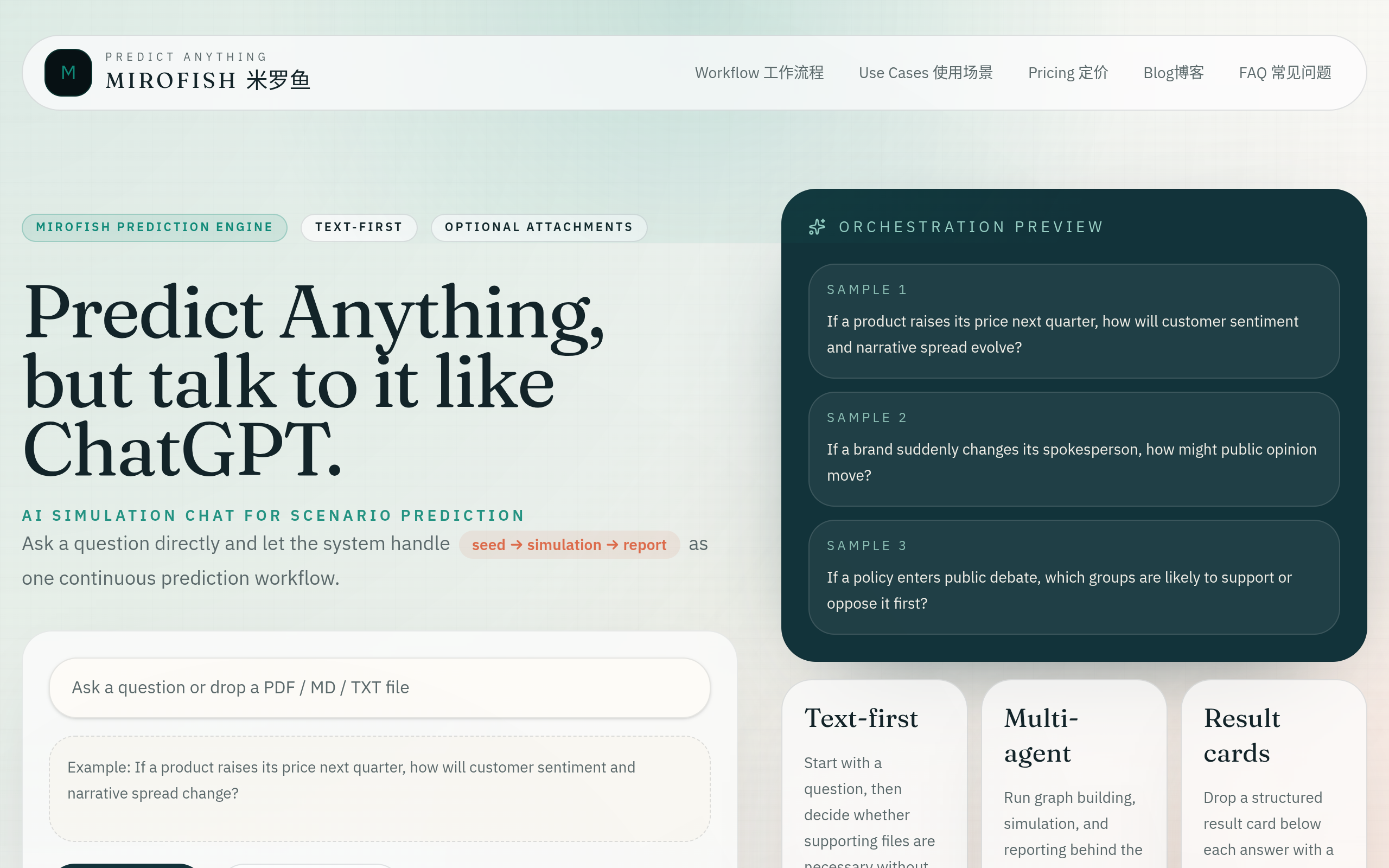
MiroFish is an AI simulation chat tool for scenario prediction. It is built around a simple idea: you should be able to ask a question the way you would talk to a chat assistant, and still get a structured prediction workflow behind the answer. Instead of returning one isolated reply, MiroFish runs a sequence that moves from seed material to a knowledge graph, then to an agent simulation, then to a prediction report, and finally to follow-up chat against the generated world. The workflow starts with seed material. You can begin with a plain-language question, a report, a policy draft, a market note, or a story fragment. Text is the primary input, and supporting files are optional. PDF, Markdown, and TXT attachments work best when they contain concrete actors, incentives, constraints, or prior context, such as a strategy memo, product FAQ, policy brief, market note, or customer research summary. From that material, MiroFish extracts actors, relationships, pressures, and factual anchors so that agents reason from structure rather than from a single flat prompt. The simulation stage lets personas interact across short-form and threaded social surfaces over multiple rounds. This is where the product differs from a single chat answer: competing audience reactions, incentives, and narrative paths can emerge and influence each other. The prediction report then condenses that emergent behavior into turning points, risk signals, confidence signals, narrative paths, and follow-up questions. A sample report structure includes an executive summary, risk signals, narrative paths, and follow-up questions, so the next question is usually obvious. MiroFish is positioned as exploratory decision support rather than a guaranteed forecast. It is meant for planning moments where human reaction matters more than a static answer. Typical use cases include campaign testing before spend is committed, pricing reaction exploration, policy stress testing, market narrative analysis, crisis r
Key Features
Text‑first Seed Ingestion
Start with a plain‑language question or upload supporting PDF/Markdown/TXT files (e.g., memos, FAQs, research) to seed the scenario without needing complex prompts.
Knowledge Graph Extraction
Automatically extracts actors, relationships, pressures, and factual anchors from seed material so agents reason from structured context rather than a single flat prompt.
Multi‑Agent Simulation
Runs interacting personas across short‑form and threaded social surfaces over multiple rounds to surface emergent audience reactions, incentives, and narrative paths.
Prediction Report & Result Cards
Condenses emergent behavior into structured outputs (executive summary, risk signals, narrative paths, confidence indicators) and places result cards inline for easy follow‑up.
How to Use MiroFish
Start by opening the chat and typing a plain-language question about the scenario you want to explore. You can begin with text only, or attach a PDF, Markdown, or TXT file if you want the simulation grounded in a specific report, brief, or source document. Name the decision, the audience, the likely trigger, and the time horizon so the simulated world has less room to drift. After you send the prompt, MiroFish runs the workflow behind the scenes: it builds a knowledge graph from the seed material, runs a multi-agent simulation across social surfaces over multiple rounds, and produces a prediction report. A structured result card appears below the answer with a summary, a report entry point, and a follow-up path. Open the report to review the executive summary, risk signals, narrative paths, and follow-up questions. Then keep asking questions against the generated world, for example which persona creates the first negative cascade or which group changes the result if its incentive chang