
Manga AI
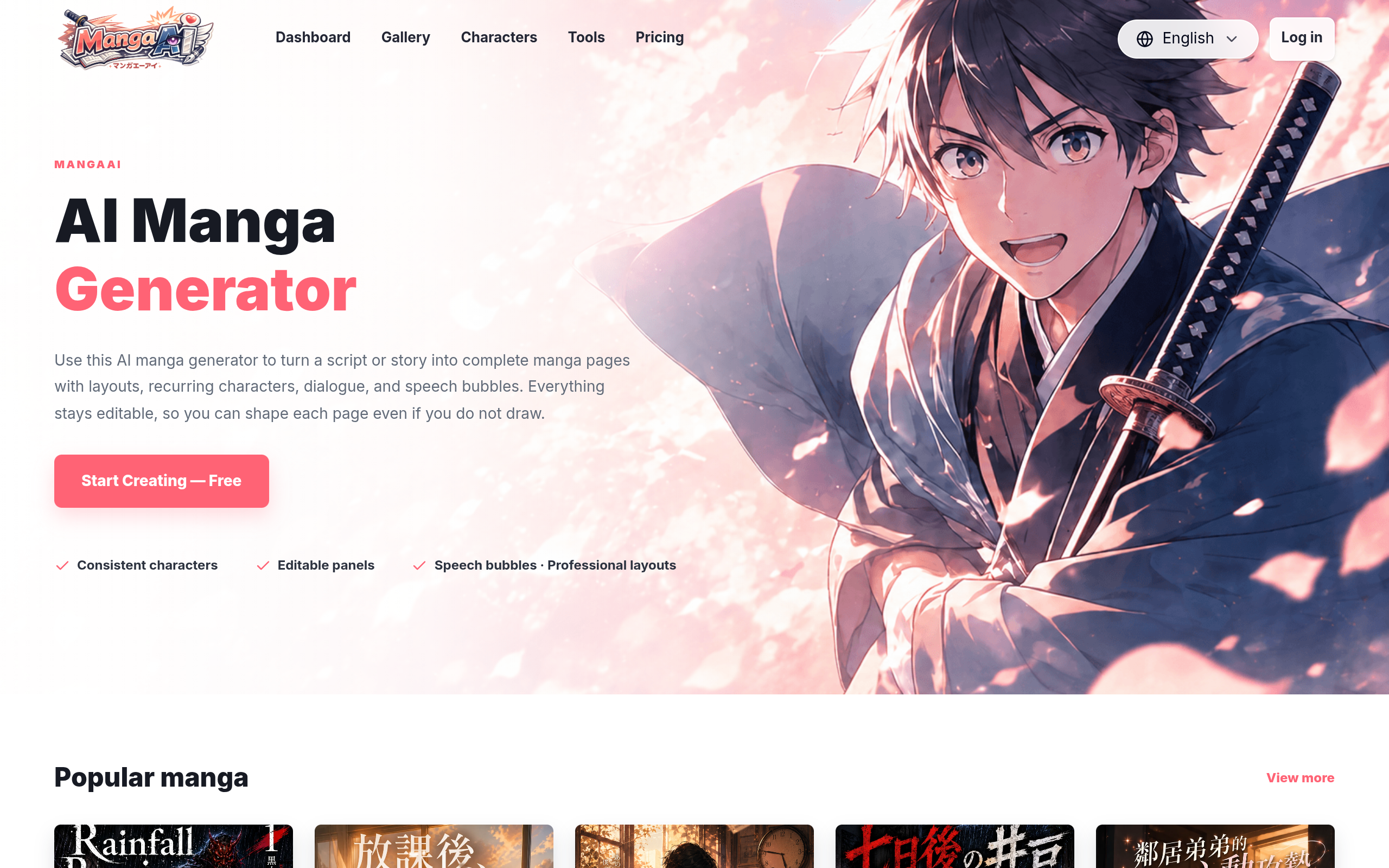
Manga AI is an AI manga generator that turns story prompts into editable manga pages with panels, character references, dialogue, and layouts.
About
Manga AI is a browser workspace for writers, artists, and teams turning a story, script, or scene into a comic page. Start with a story and visual direction, then add reusable character details before generating panels. The AI manga generator combines panel composition, dialogue, speech bubbles, and page layout in one editable workflow.
Key Features
Panel-by-panel generation
Automatically converts a written scene or script into a structured sequence of manga panels with suggested camera angles, pacing, and composition for a readable page.
Reusable character references
Create and save character profiles (faces, outfits, colors, personality) to keep visual consistency across panels, pages, and chapters.
Editable layouts & dialogue
Fully editable page workspace lets you resize frames, move panels, adjust speech bubbles, and rewrite dialogue without regenerating the whole page.
Multiple manga art styles
Choose visual directions and genres (classic monochrome, sketch, full-color, vertical Webtoon) and apply style guidance across a project for cohesive art direction.
Cloud workspace & export
Browser-based project management to store scripts, characters, pages, and revisions; export pages and publish to a community gallery for feedback.
How to Use Manga AI
1) Describe your story or scene in natural language (a script, beat list, or short prompt). 2) Pick a manga style and page format (monochrome, color, webtoon, genre direction). 3) Add or create reusable character references with traits and outfits to ensure consistency. 4) Generate the page, then edit individual panels, speech bubbles, dialogue, and layout; export or publish when finished.