
DataForAIVisibility
See where AI recommends competitors instead of your brand.
About
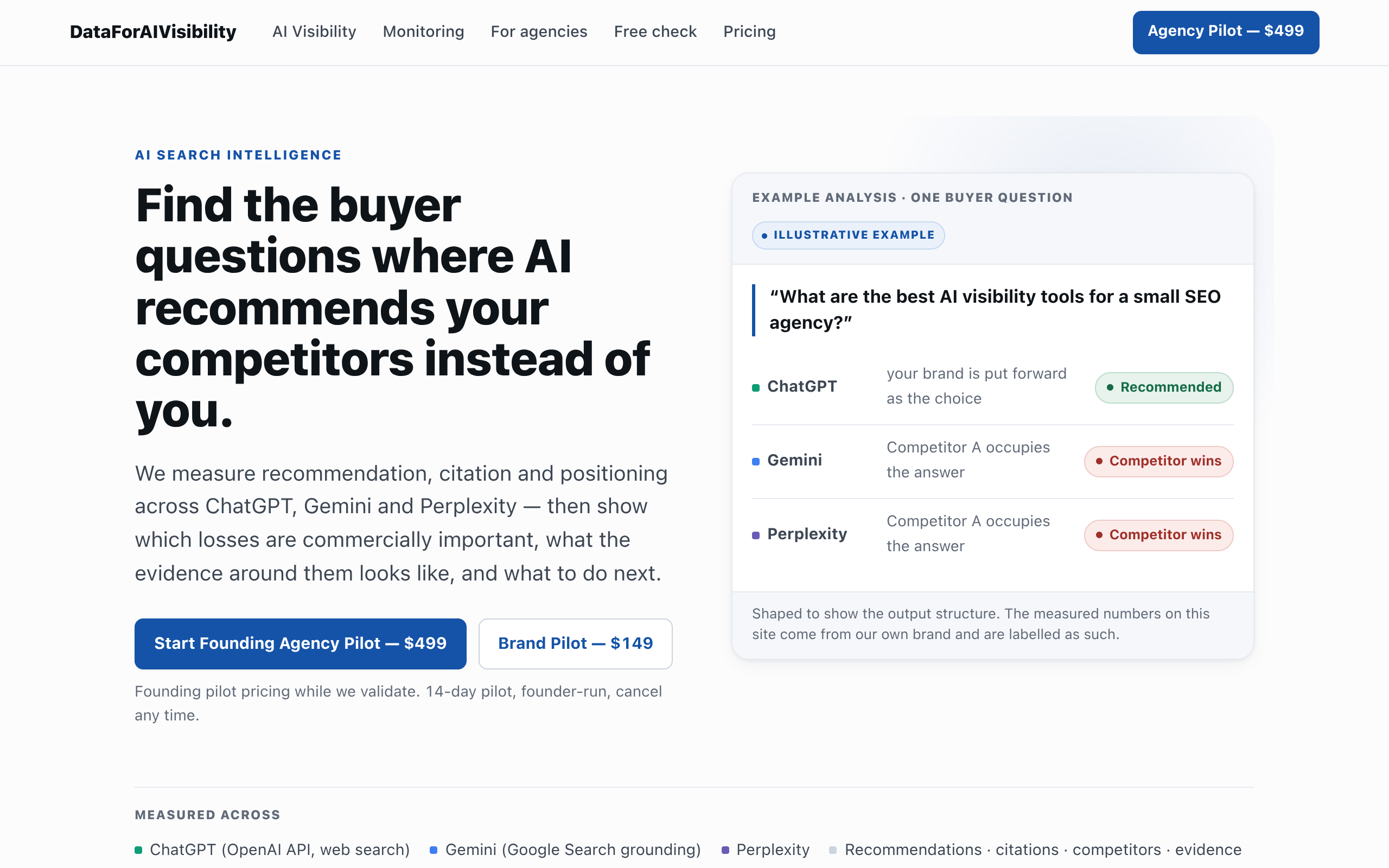
DataForAIVisibility measures commercially important buyer questions across OpenAI, Gemini and Perplexity. It separates mentions from recommendations, identifies competitor gaps and citation evidence, compares those findings with owned-site evidence and product truth, and helps teams prioritize actions and remeasure the result.
Key Features
Cross‑engine Recommendation Monitoring
Continuously queries ChatGPT, Gemini and Perplexity for a defined set of buyer questions and records whether your brand is mentioned, cited, or recommended.
Mention vs. Citation vs. Recommendation Classification
Separates non‑commercial mentions, page citations, and outright recommendations so teams can see the commercial outcome rather than a single blended metric.
Evidence & ProductTruth Validation
Matches winning answers to observed themes and to your owned‑site evidence, then verifies product claims (true/false/unknown) before recommending content changes.
Actionable Prioritization & Re‑measurement
Turns findings into defensible actions (target page, change, evidence, remeasure protocol) and re-runs compatible checks to show whether visibility actually changed.
Raw History & Re‑scoring
Stores every raw engine answer so historical runs can be re-scored with improved detection rules without repurchasing data.
How to Use DataForAIVisibility
1) Define the buyer question cohort: pick the 10–20 commercially important buyer questions you want tracked. 2) Start monitoring: sign up or start a pilot and run the cohort across ChatGPT, Gemini and Perplexity. 3) Review findings: inspect per‑question positions (mentioned/cited/recommended), competitor winners, evidence and ProductTruth states. 4) Take action & remeasure: implement recommended, defensible changes to target pages and re-run the same protocol to confirm impact.