
Arun Kothapally
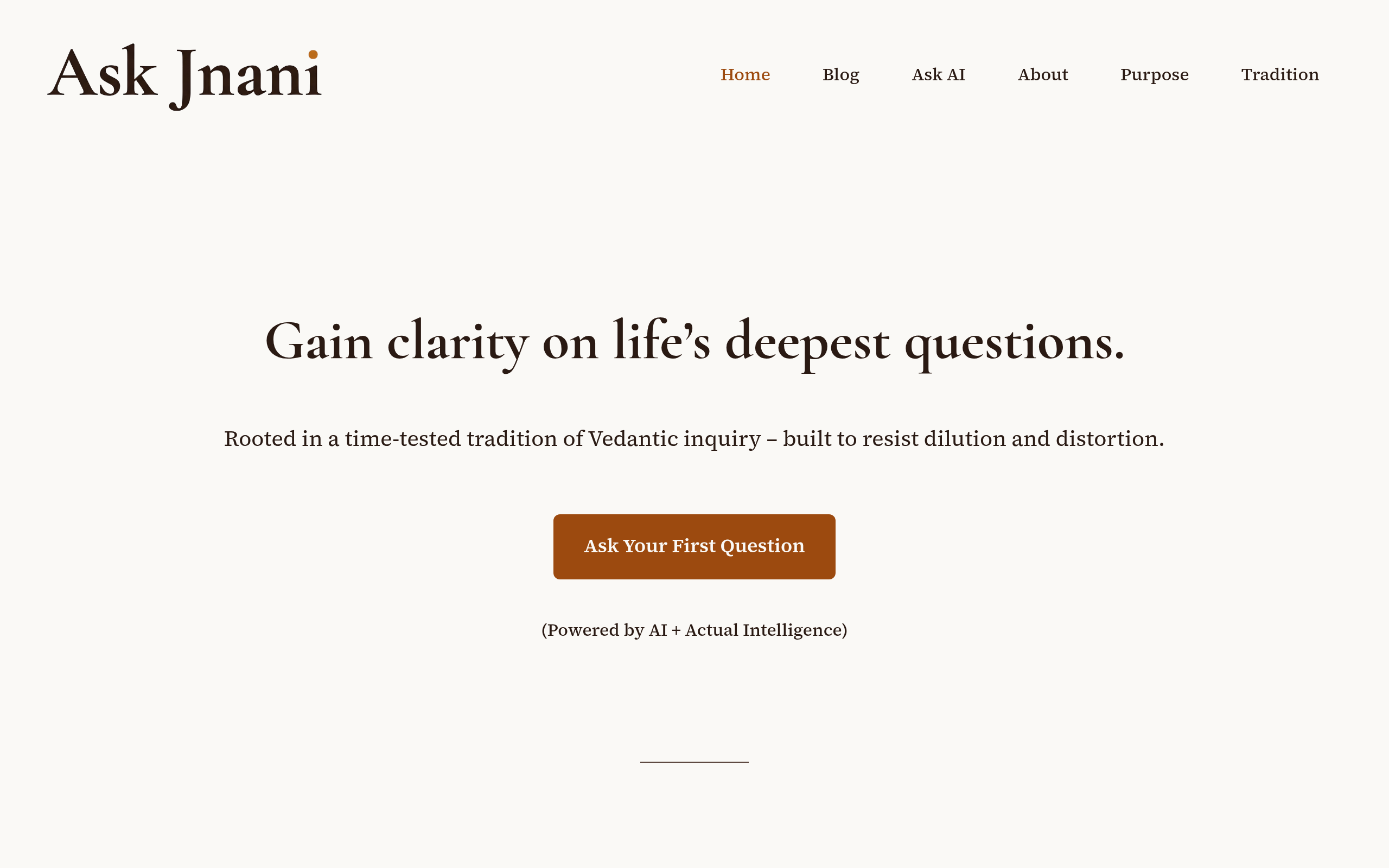
Ask Jnani is a precision philosophical dialogue tool grounded in the traditional methodology of Advaita Vedānta. It exists to preserve clarity in an e
About
Ask Jnani is a precision philosophical dialogue tool rooted in the traditional methodology of Advaita Vedānta. It is not a spiritual lifestyle product, but a structured inquiry environment built to preserve conceptual clarity in an age where conversational AI often blends, dilutes, and flattens serious teachings. Designed as a Retrieval-Augmented Generation (RAG) system powered by GPT-5, it draws from a carefully curated corpus aligned with the Advaita sampradāya — including the Upaniṣads, Bhagavad Gītā, Brahma Sūtras, and major prakaraṇa texts as unfolded in the Śaṅkara tradition. Its purpose is not inspiration, but disciplined understanding; not emotional reassurance, but intellectual precision.
Key Features
Retrieval-Augmented Generation (RAG)
Combines large-language-model generation with retrieval from a curated corpus (Upaniṣads, Bhagavad Gītā, Brahma Sūtras, prakaraṇa texts) to ground replies in authoritative sources.
SamVaad — Structured Philosophical Dialogue
A methodological dialogue engine modeled on traditional Advaita inquiry that unfolds topics in a logically sequenced, disciplined manner rather than free-form spiritual chat.
Scriptural Fidelity & Citations
Responses prioritize fidelity to the Śaṅkara tradition and provide scriptural reasoning and references to preserve conceptual clarity.
Precision-Oriented Clarification
Designed to resolve conceptual confusion through careful definition, logical distinctions, and disciplined argumentation rather than inspiration or motivational content.
How to Use Arun Kothapally
1) Open AskJnani (askjnani.com) and enter a clear, focused question about a philosophical topic (e.g., "What is ātman according to Advaita?"). 2) Indicate any context or assumptions you hold (your reading level or specific texts if relevant) so the system can tailor rigor and depth. 3) Read the structured reply, review cited scriptural passages or references, and ask follow-up clarification questions to drill down on definitions or logical steps. 4) Use iterative questioning (request contrasts, objections, or classical commentarial views) to refine understanding and maintain methodological consistency.